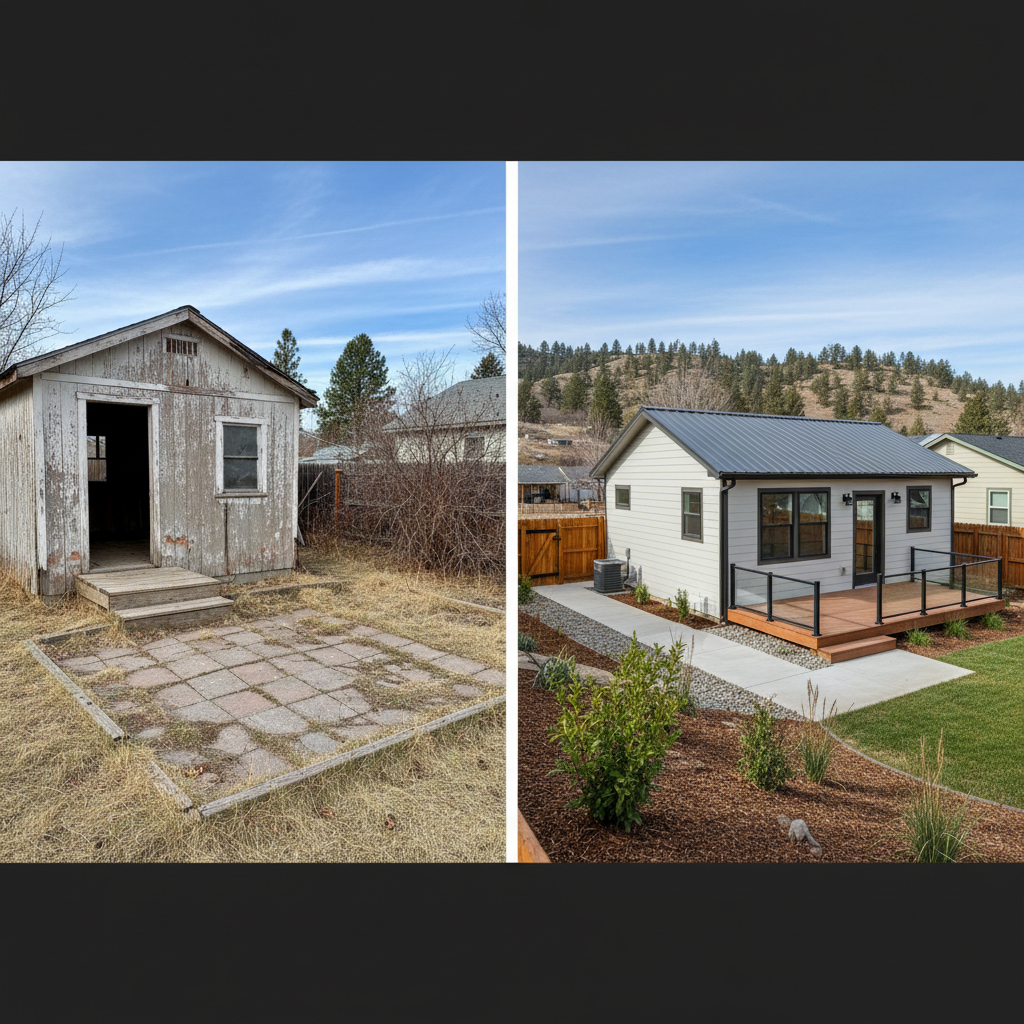
You're looking to add a detached ADU to your Boise property. Smart move. Whether it's for family, rental income, or a home office, an ADU adds serious value and flexibility. But once you've decided on detached, you've got another big choice to make: do you go with a traditional site-built unit, or does a modular ADU make more sense? As someone who’s been building in this valley for years, I’ve seen both approaches, and they each have their pros and cons. Let's talk about what you really need to know.
What's the Difference, Really?
Okay, so 'site-built' is probably what you picture when you think of construction. We dig a foundation, bring materials to your backyard, and build the structure piece by piece, right there on your property. It's like building a regular house, just smaller.
Modular, on the other hand, is a bit different. Think of it like a very fancy, custom-built manufactured home, but it's not on a chassis. These units are built in sections in a factory, usually somewhere like Nampa or even further afield, under controlled conditions. Once the sections are complete, they're trucked to your site and craned onto a pre-built foundation. Then, we connect the sections, finish the interior and exterior seams, and hook up all the utilities.
Cost: It's Not Always What You Think
Most people assume modular is always cheaper. And sometimes it is, but it's not a given, especially for a custom detached ADU. With modular, you save on some labor costs because the factory can build more efficiently. They're not dealing with weather delays, and they buy materials in bulk. However, you've got significant transportation costs – getting those big boxes from the factory to your backyard. And then there's the crane. Craning a modular unit into a tight Boise backyard, especially in older neighborhoods like the North End with mature trees and narrow streets, can be a complex and expensive operation. Site-built avoids these specific transport and crane costs, but you're paying for on-site labor and materials delivered piecemeal. Often, for a true custom ADU, the final price tag can be surprisingly similar. It really depends on the size, finishes, and site access.
Durability and Maintenance: A Level Playing Field
This is where a lot of misconceptions pop up. Some folks think modular means less durable, like a mobile home. That's just not true for modern modular construction. Modular units are built to the same Idaho building codes as site-built homes. In fact, because they have to withstand being transported, they're often over-engineered with extra structural reinforcement. So, when it comes to long-term durability and maintenance, you're looking at pretty much the same picture for both. A well-built modular ADU will last just as long and require similar upkeep as a well-built site-built one. It all comes down to the quality of the builder, whether they're in a factory or on your site.
Appearance: Customization is Key
This is where site-built often shines, especially if you have a very specific vision or want your ADU to perfectly match your existing home. With site-built, we can customize every angle, every roofline, every window placement to blend seamlessly with your property. Want a specific siding material that matches your main house, or a unique architectural feature? No problem. It's a blank slate.
Modular units have come a long way, and you can get some really attractive designs. But they are built in sections, so there are some limitations to how complex the design can be. You might have fewer options for roof pitches or very unusual layouts. That said, many modular companies offer a great range of styles and finishes that look fantastic. If you're okay with choosing from a set of proven designs and don't need hyper-specific custom details, modular can look just as good.
Construction Timeline: Modular Often Wins
If speed is your top priority, modular usually has an advantage. While the site work (foundation, utilities) is happening in your backyard, the ADU itself is being built simultaneously in the factory. This parallel process can significantly cut down the overall construction time. Once the foundation is ready, the modular unit can be set and made weather-tight in a matter of days, with interior finishes following quickly. Site-built construction is more susceptible to weather delays – think about those Boise winter snows or spring rains – which can stretch out the timeline.
My Recommendation for Boise Homeowners
Look, both options are viable, and Boise ADU Solutions can help you with either. But if I had to give a general recommendation for most Boise homeowners, especially those in established neighborhoods with smaller lots or who value seamless integration, I'd lean towards site-built construction for detached ADUs.
- Customization: It gives you the ultimate flexibility to design an ADU that truly complements your existing home and maximizes your specific lot, whether it's dealing with a tricky setback or a sloped yard.
- Site Access: You avoid the headaches and significant costs associated with craning large modular sections into tight spaces, which is a common challenge in many older Boise neighborhoods.
- Local Economy: You're supporting local tradespeople directly on your property from start to finish.
Modular is a fantastic option if you have excellent site access, are on a tighter timeline, and are happy with a more standardized design. But for the average homeowner looking for a detached ADU that feels like it was always meant to be there, built to last and perfectly tailored to their needs, site-built often provides the best overall value and fewest logistical headaches in our unique Boise environment. The best first step? Talk to a builder who understands both methods and can walk your property with you to discuss the specifics.