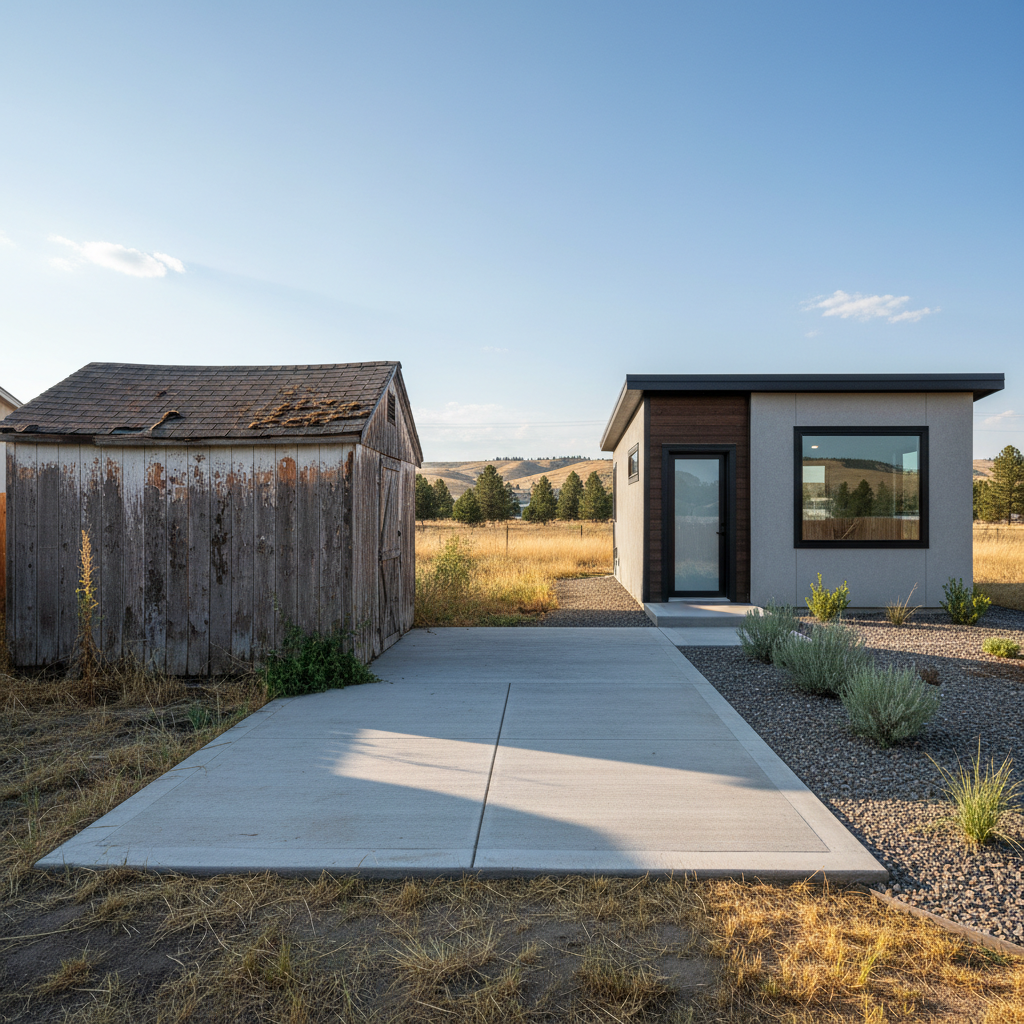
Alright, so you're thinking about adding an ADU to your Boise property. Smart move. Whether it's for family, rental income, or just some extra space, an ADU can be a game-changer. But once you've decided an ADU is right for you, the next big question usually pops up: how are we actually going to build this thing? You've essentially got two main paths when it comes to permitting and construction: a traditional stick-built ADU or a manufactured (sometimes called modular) ADU. I've seen both go up around here, from the North End to South Boise, and they each have their pros and cons. Let's get into it.
Stick-Built ADUs: The Traditional Route
When I talk about stick-built, I mean what most people think of when they picture a house being built. We're talking about framing it up on site, piece by piece, just like your main house was probably constructed. This is the classic way to do it, and it's what Boise ADU Solutions specializes in.
Cost
Upfront, stick-built can sometimes look a little pricier per square foot. You've got all the labor and materials coming to your site daily, and that adds up. However, there's often more flexibility to control costs by choosing specific finishes or making adjustments as we go. You're paying for custom craftsmanship, and that has a value.
Durability
This is where stick-built really shines, especially in our climate. When built right, a stick-built ADU is incredibly durable. We're using standard construction methods that have been proven for centuries. We can choose materials specifically suited for Boise's hot summers and cold, sometimes snowy, winters. You're building something that's meant to last as long as your main home.
Maintenance
Maintenance for a stick-built ADU is pretty much identical to maintaining any other house. Standard roofing, siding, windows – anything can be repaired or replaced by local contractors. Parts are readily available, and there's no special knowledge required. It's straightforward.
Appearance
This is another huge advantage. With stick-built, you can match your existing home perfectly. Same siding, same roof pitch, same window styles. Or, if you want something completely different, you can do that too. You get total design freedom. This is especially important for maintaining property values and curb appeal, which is a big deal in neighborhoods like the Boise Bench where home styles vary a lot.
Manufactured ADUs: The Factory Approach
Manufactured ADUs, often built in a factory and then transported to your site, have gained some traction. They're not mobile homes, mind you; they're built to specific codes, but the construction process is very different.
Cost
Often, the initial sticker price for a manufactured ADU can seem lower. The factory assembly line can be more efficient for certain parts of the build, which can translate to savings. However, you need to factor in significant transportation costs, crane rental to set it, and then all the on-site utility hookups and foundation work. Sometimes, those 'hidden' costs can eat up a lot of the initial savings.
Durability
This is where I have some reservations for our Idaho conditions. While manufactured homes are built to code, they're designed to be transported. This means they often have lighter framing and different construction techniques to withstand the stresses of being moved. Over time, I've seen some manufactured units not hold up as well to the constant freeze-thaw cycles we get here, or the intense summer sun. The materials might not be as robust as what we'd typically use in a stick-built home.
Maintenance
Maintenance can be a bit trickier. While many components are standard, some manufactured units use proprietary parts or construction methods that can make repairs more difficult or expensive down the line. Finding contractors familiar with specific manufactured home systems can sometimes be a challenge, and getting matching siding or trim might be harder than with standard materials.
Appearance
Design options are usually more limited with manufactured ADUs. You're often choosing from a set of pre-designed plans and finishes. While they've come a long way aesthetically, achieving a seamless match with your existing home's architecture can be tough. They often look like what they are: a unit that was built elsewhere and dropped onto your property. This can impact the overall look and feel of your property.
My Recommendation for Boise Homeowners
Look, if you're building an ADU in Boise, you're making a long-term investment. You want something that's going to stand up to our unique weather, blend seamlessly with your property, and add real value for decades. That's why I almost always recommend a stick-built ADU.
The slightly higher upfront cost is almost always justified by the superior durability, easier maintenance, and complete design flexibility you get. You're building a permanent structure that feels like a natural extension of your home, not an afterthought. It'll integrate better with your landscaping, handle the occasional heavy snow we get in the foothills, and simply last longer with fewer headaches. When you're ready to talk specifics about building an ADU that truly fits your needs and your property, give us a call at Boise ADU Solutions. We're here to help you build it right.